
Yes, Even You Can Become Technical.
My experience going from building no apps to building side projects every other week by vibecoding.

I. Intro
I didn’t have any coding experience before coming to college. I didn’t know how to build a website, set up a database, or even how to make an API call. Despite challenging myself by majoring in data science and taking a boatload of CS classes (data structures, artificial intelligence, probability), I still felt behind in comparison to my peers in building projects, staying up to date on new developer tools, and proving that I had a ‘technical’ background.
Then vibecoding arrived, and everything I thought I knew about ‘being technical’ changed.
Everyone I know who’s tried vibecoding instantly understood its magic: being able to turn text instructions into full-stack builds. It’s becoming increasingly less important to understand which programming languages to use and more important to understand what to build, along with how to leverage AI assistants as teammates to realize your vision.
I wanted to sit down today and synthesize my experience with vibe coding to describe when to (or when not to) lean into vibe coding, a full-fledged tech stack to vibe your way into a complete project, and where the future of building with these tools may be headed.
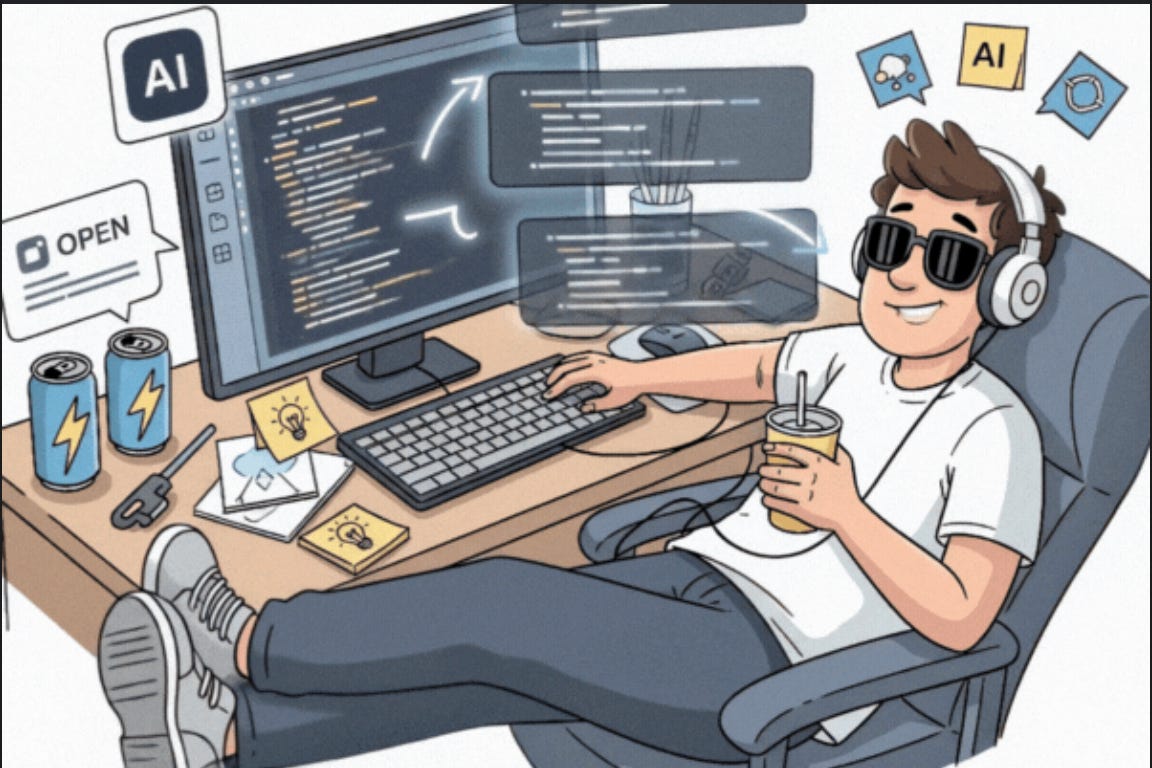
II. When Vibe Coding Tools Are Useful (And When They Aren’t)
Before going into exactly how I approach building apps, I wanted to go over how to vibecode optimally; when to lean on them and when to tread carefully.
When It Works
MVPs and Prototypes
When you’re testing an idea, not building infrastructure. The goal is to put something clickable in front of users this week as quickly as possible. If the core assumption is wrong, you want to find out before you’ve invested months.
CRUD Apps and Dashboards
Create, Read, Update, Delete. Most internal tools are just CRUD operations with a nice interface: admin panels, content management systems, or data visualization dashboards. AI tools build these easily because the patterns for building them are well-established.
Marketing Sites and Landing Pages
Static content, forms, maybe some light interactivity. These used to take days in WordPress or Webflow. Now you describe what you want and deploy in an hour.
Internal Tools
The expense tracker your team needs. The interview notes system for customer research. The project dashboard to replace that janky spreadsheet. These tools save hours but aren’t worth weeks of development.
The overall pattern is that you’re using vibecoding to 10x the speed at which you can build simple tools and prototypes before building out entire systems.
When It Breaks Down
Complex State Management
Multiplayer features, real-time collaboration, and undo/redo systems. When multiple users are affecting the same data simultaneously, AI-generated code gets messy fast. You’ll debug race conditions and state synchronization issues that “proper” architecture would’ve prevented.
Performance-Critical Applications
If your app needs sub-5ms response times, heavily optimized database queries, or careful memory management, vibe coding won’t get you there. The generated code prioritizes “working” over “fast.”
Heavy Algorithmic Work
Video processing, ML model training, complex data transformations. These require understanding actual computer science fundamentals. AI can scaffold the structure, but you need to write (or deeply understand) the core algorithms.
Scale (100k+ Users)
Once you have real traffic, the “good enough” architecture starts cracking. Database queries slow down, API routes timeout, and edge cases multiply. You need proper caching, load balancing, and monitoring—architectural decisions, not better prompts.
When You’re Iterating Constantly
If you’re touching the same 5 files 50 times a day, AI-generated code becomes a liability. You need to understand the codebase deeply to move quickly. This is your signal to graduate from vibe coding to actually learning the stack.
Generally, when the cost of being wrong is high, vibe coding is the wrong tool.
What Makes Vibe Coding Special?
Here’s what people miss: vibe coding isn’t about writing less code or avoiding “real” development. It’s about collapsing the feedback loop.
In the traditional path, you’d spend weeks learning React, setting up authentication, configuring deployment—all before showing anything to a user. By the time you had something shippable, you’d invested so much time that pivoting felt impossible. The sunk cost fallacy kicked in. You’d convince yourself the idea was good because you’d already spent 100 hours on it.
Vibe coding flips this. You describe what you want, get a working prototype in hours, and put it in front of users immediately. They click the wrong button. They get confused by the flow. They tell you the core assumption is wrong. You can now iterate that same night and test again tomorrow.
You learn what users actually want in Week 1, not Month 6.
And here’s the uncomfortable truth: most ideas fail. Most MVPs don’t find product-market fit. The “proper” way to build with clean code, write comprehensive tests, and scale infrastructure is wasted effort if the product is fundamentally wrong. Vibe coding embraces that reality. Be wrong fast so you can be right faster.
The code quality doesn’t matter if the product is wrong. But once you have users who complain about bugs or request features, that’s when you make iterative improvements.
My guiding philosophy for vibe coding is to move fast and break things, and learn just as fast.
III. The Vibe Code Stack
Here’s a list of commonly used tools for vibe coding, segmented by different categories: Code Generation, Frontend Framework, Hosting and Deployment, Backend & Database, and Observability & Evaluation, among other tools that don’t fall within these five buckets.
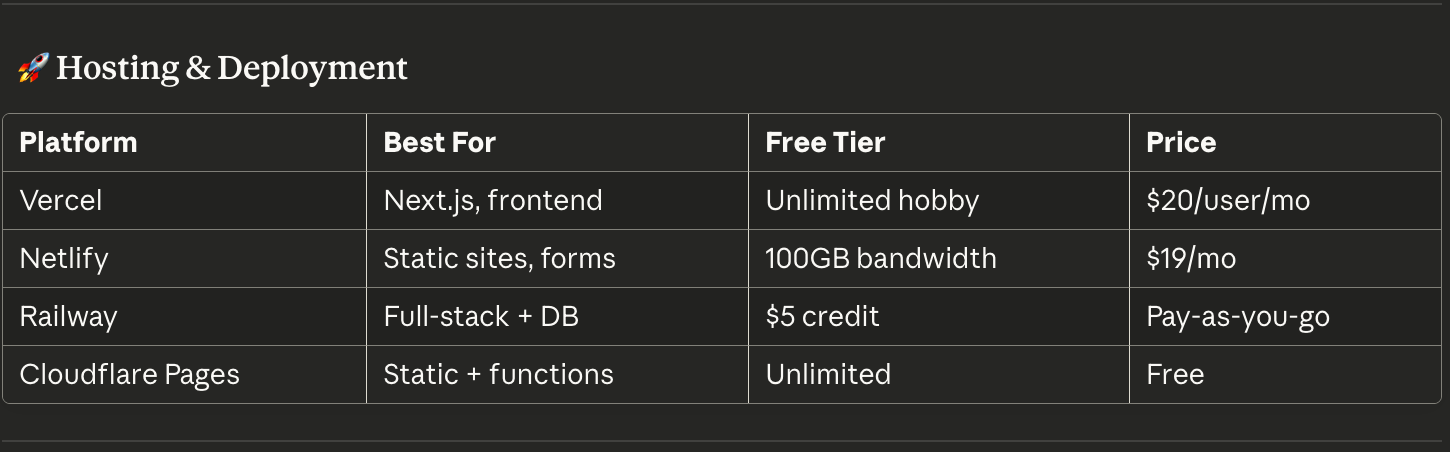
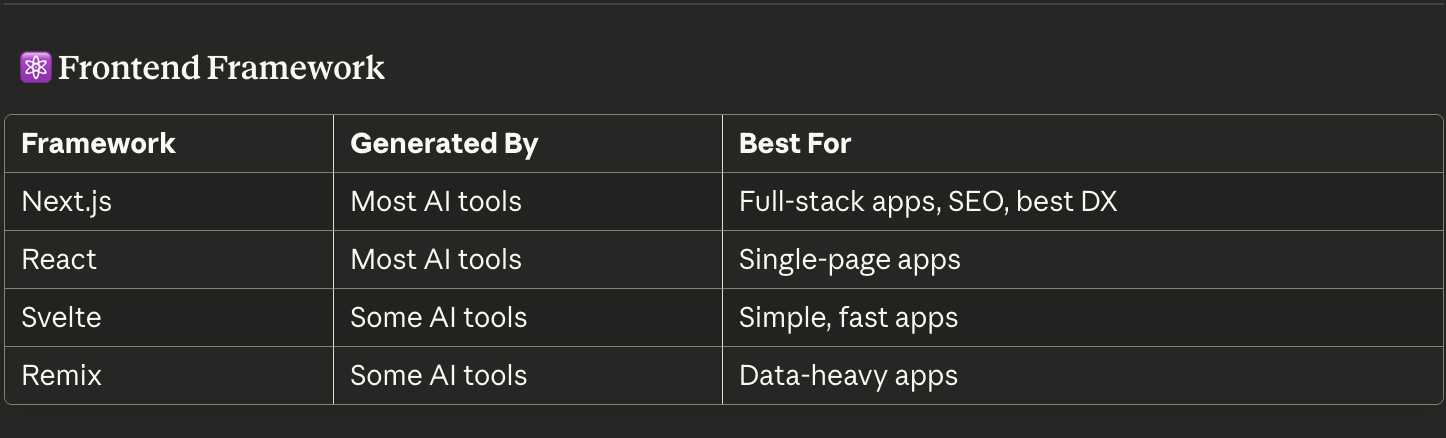
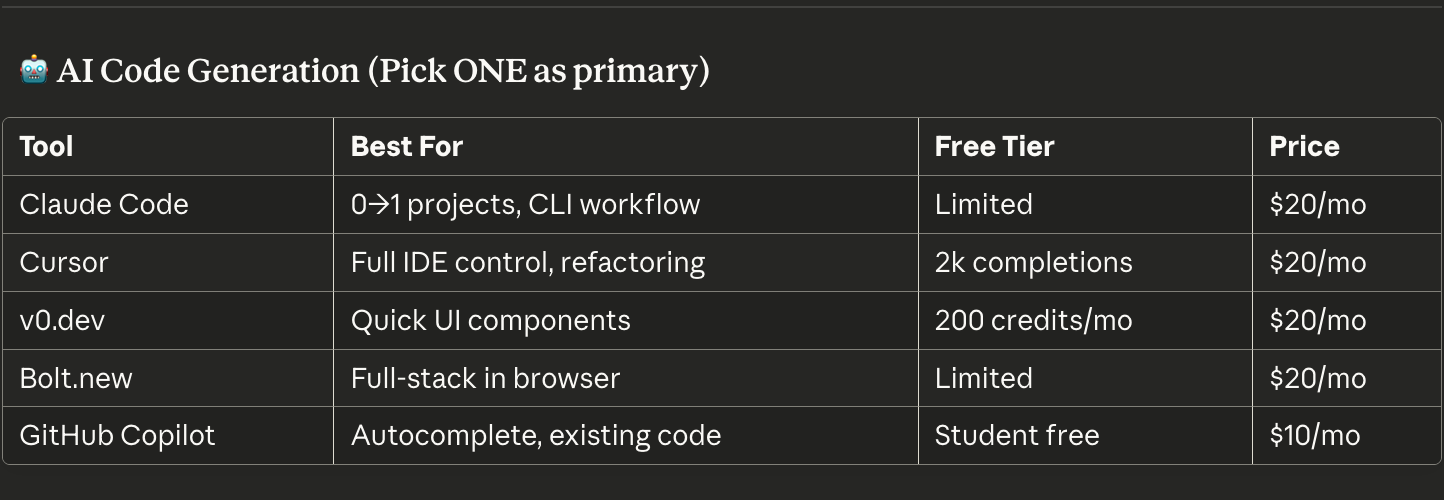
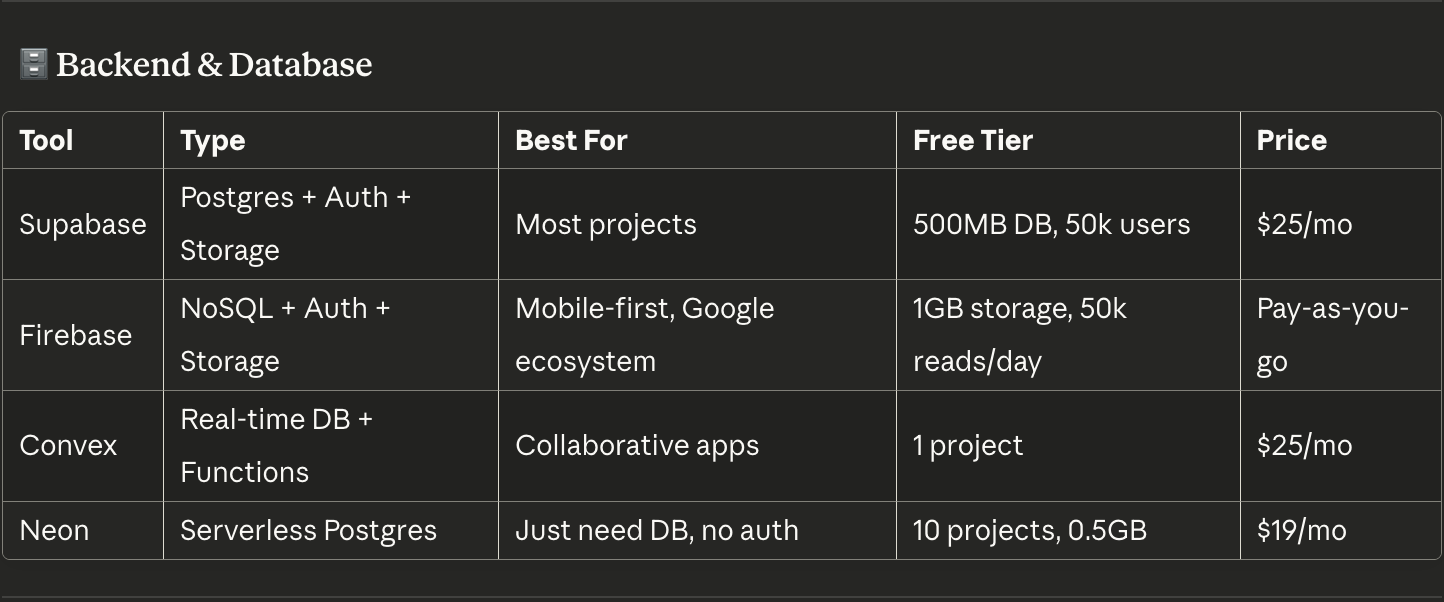
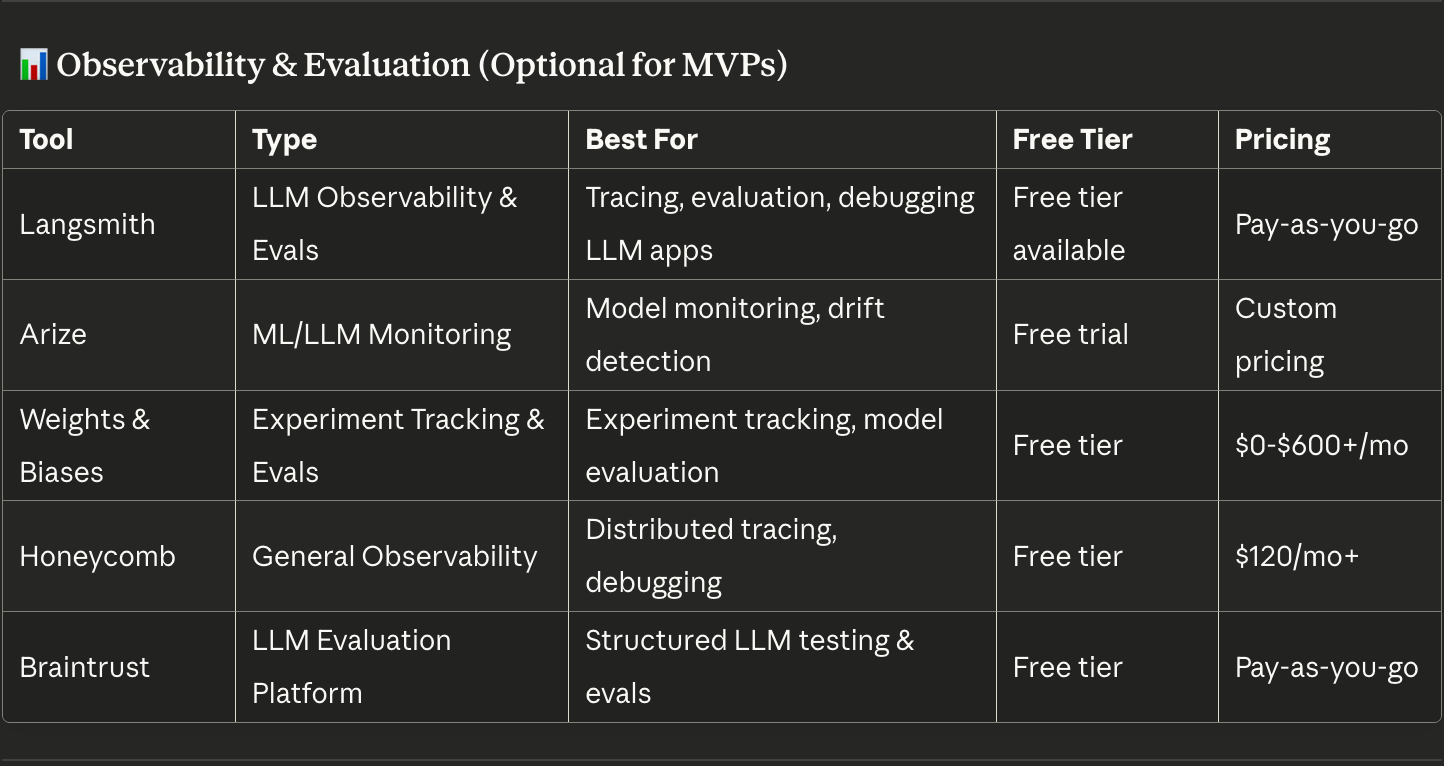
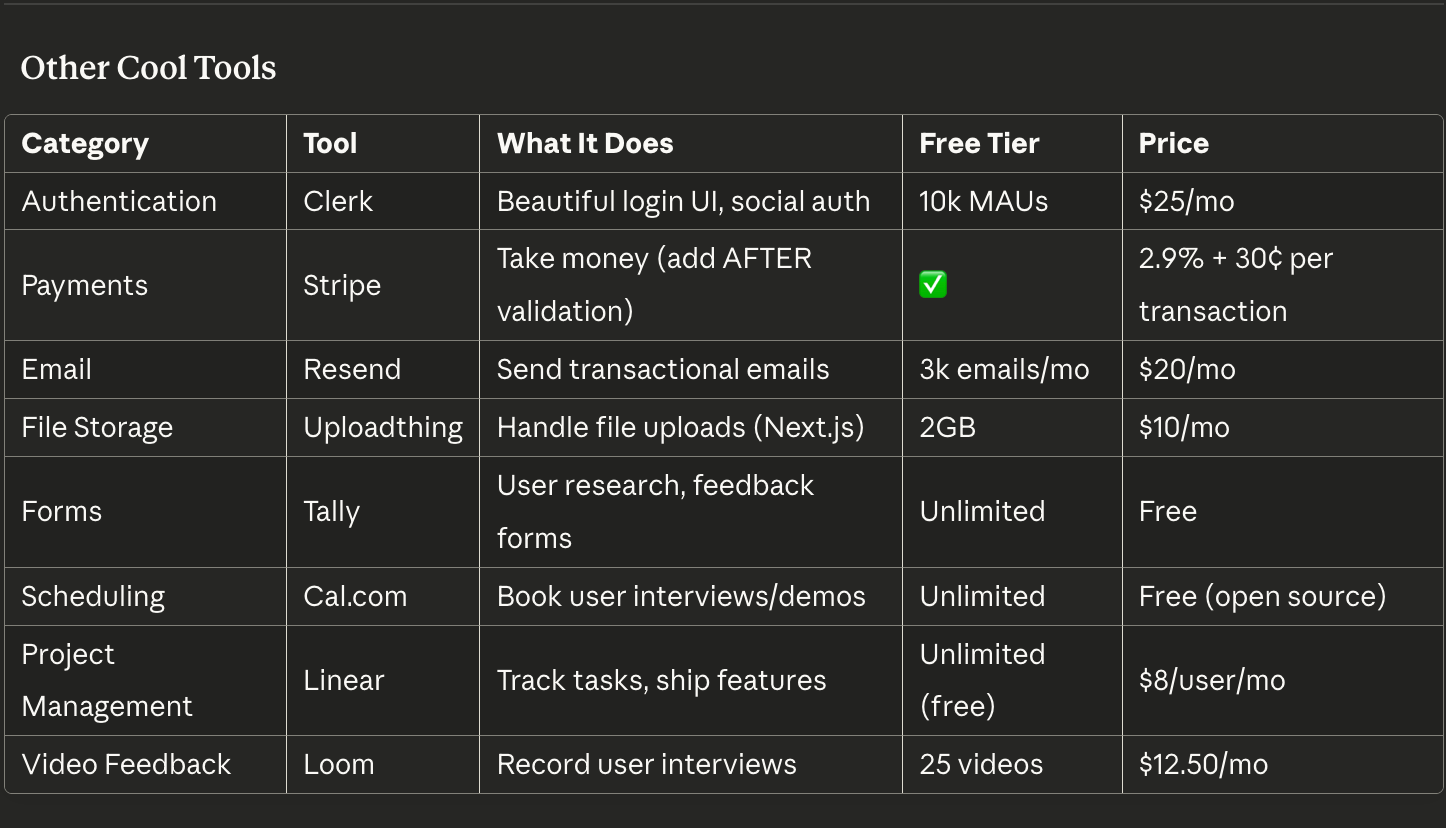
My go-to vibecoding stack is: Claude Code (great for completing complex coding tasks, understands entire codebases the best), Next.js (easy-to-use framework for full stack), Vercel (simple to deploy, generous free tier), Supabase (the easiest to deploy for vibecoded apps), and Langsmith (overall cost-effective, comprehensive evaluation of what your code is doing).
Best Practices:
Plan out features and components before generating code. AI agents struggle with modification and optimization, so a detailed roadmap minimizes errors upfront.
When debugging, ask your assistant to explain how individual parts work. Understanding what broke and why helps you fix it faster.
Test your app at its most basic level as soon as possible. This prevents wasted tokens and overengineering features nobody wants yet.
Keep a .env file with all your API keys organized in one place (like a keyring for your apartment). You’ll thank yourself later.
IV. Final Thoughts
The line between “technical” and “non-technical” is disappearing. In 3-5 years, the question won’t be “can you code?” but “can you think clearly about how and what to build?” AI tools will handle syntax, boilerplate, and common patterns, while your value becomes product thinking, user empathy, and knowing when the AI is wrong. Traditional CS education will shift from “learn to code” to “learn to architect and debug,” focusing on systems thinking over syntax memorization. These classes will eventually encourage AI use, with new goalposts to measure learning outcomes. We’ll see a surge of solo founders shipping complex products that used to require full teams, but also a wider skill gap: those who can’t break problems down or validate assumptions will drown in AI-generated code they don’t understand.
I also recognize that a lot of the content in this piece is geared towards folks who want to build products. Sometimes it’s fun to just build a little side-project (wishlists, hydration reminders, virtual postcards, etc.), and I highly recommend folks to explore building things for your personal enjoyment as well!
With all that being said, there’s no better time than now to take an afternoon to sit down, sip a cup of coffee, and experiment with these tools!
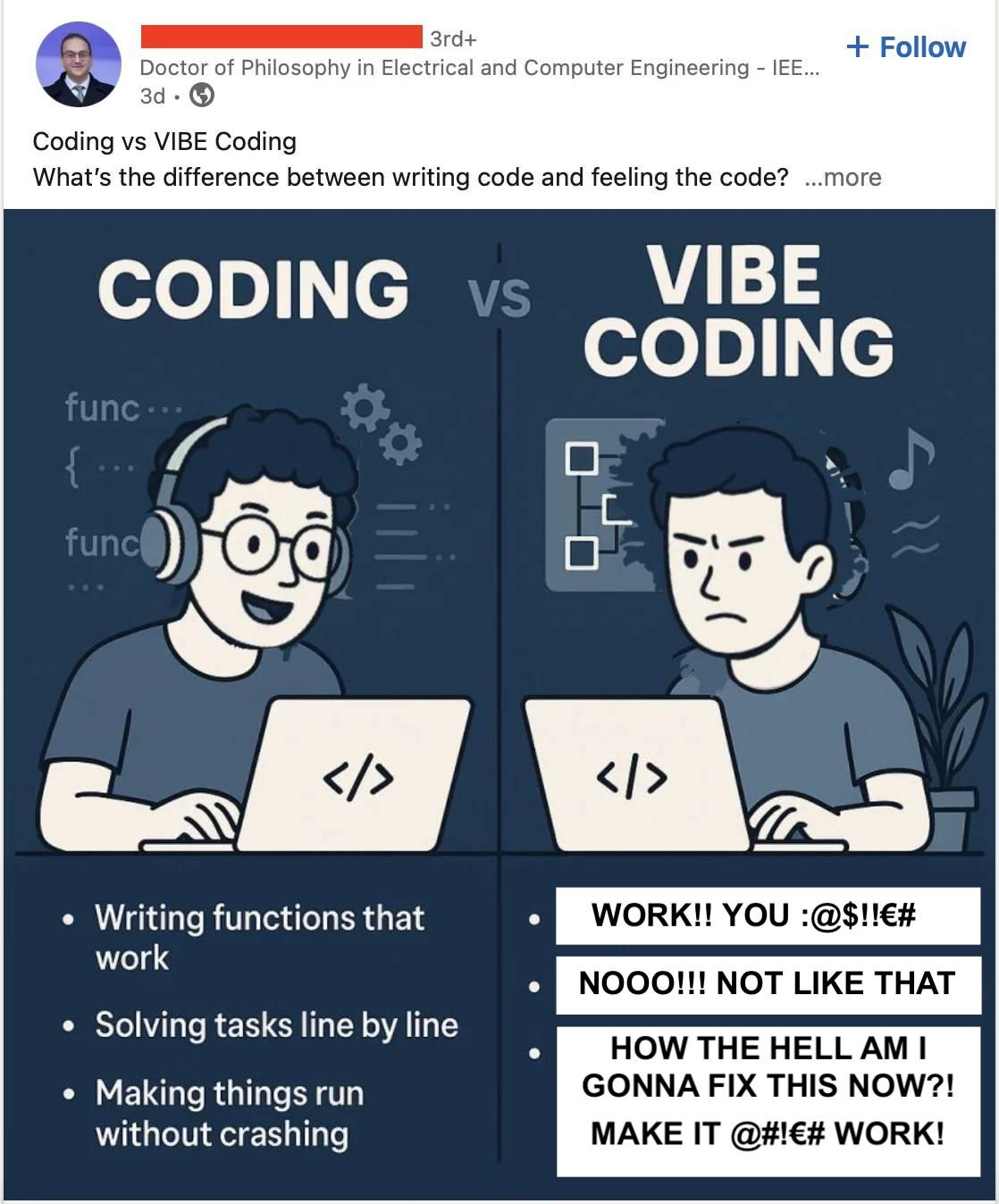
*how not to vibecode
P.S. If you’re a student looking to build, I highly recommend checking out Build In College for a dashboard of free vibecoding resources. All it takes is your personal + student ID to unlock hundreds of dollars of free subscriptions and credits.